Blog
Nerd level Mild peril (level 2 of 3)
Keeping Watch
Why I built Watchkeeper, a coordinator for AI agents, what it changed for a three-person team, and why I'm giving it away.
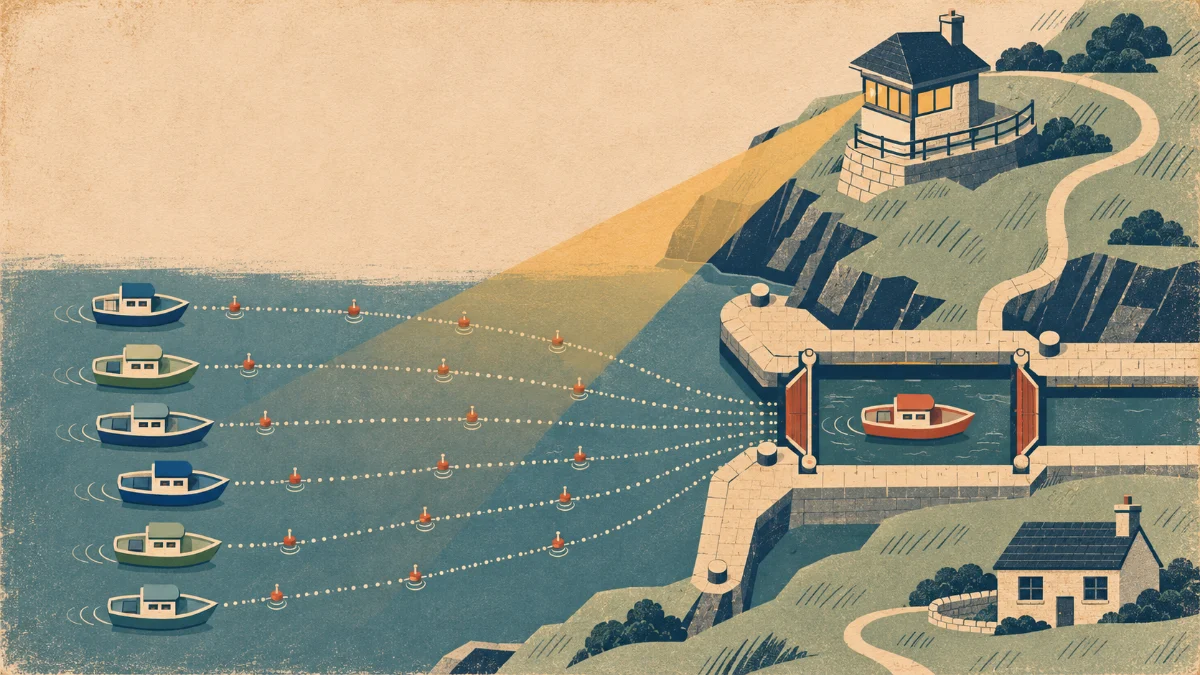
In the Royal Navy, the officer of the watch runs the ship while the captain sleeps. The officer of the watch keeps everything moving, deals with whatever comes up, and wakes the captain only for the decisions that are genuinely the captain’s.
For the past couple of months I’ve been working a bit like that. The officer of the watch is an AI agent, and the captain is me. The sleeping part is aspirational.
Before
At Pedagogue, where I’m Chief Technology Officer, there are three of us. We work with schools that each want something slightly different, and we’re building the product while we build the company. A lot of each day went on keeping track. I checked every thread in Slack, where we talk to each other, and every email, by hand, to make sure no school was left waiting. When I needed a number from our database, I asked an AI to write the query from a plain-English question, which helped, but only one question at a time. Pulling the relevant facts together usually took until late in the day.
What I built
So I built a coordinator. It watches Slack and email, so we can answer schools in good time and catch problems while they’re still small. It can also read the leadership team’s shared Google Drive and documents, and the code itself. Put those together and the combinations get interesting quickly.
The design is simple. Each piece of work gets its own agent, called a lane. One more agent, the coordinator, reads everything the lanes say, decides who goes next, and makes sure two of them never release changes over each other. They talk through one shared file, and each message goes in with a short command like this one, from a lane called ALPHA asking for its turn:
wk post --as ALPHA --to COORDINATOR REQUEST OP-0001 --body "Ready for staging. About 20 minutes."The command stamps the time from the clock, because AI models are confidently wrong about what time it is.
The first version ran from 2 October to 9 November. Over those 38 days, between seven and 15 agents were registered at any one time. They wrote 8,723 posts to the shared file, and 146 pull requests, which are proposed changes to the code, were merged. The version I’m releasing is much smaller, and it has worked just as well.
What changed
By my own rough estimate, and it is an estimate rather than a measurement, we were a three-person team working like a team of five or six. Now it feels more like a traditional team of 13 to 15.
The bigger change is where the time goes. We spend it on the questions that matter in the long run: how we give schools more value, what the company should become, and how we answer whatever is worrying the market this month. Much less of it goes on operational detail.
The part I’m serious about
There’s a version of this story where the AI answers the customers and the founders go to the beach. I’d quite like to stay employed, so this isn’t it.
The coordinator drafts and never sends. Every email, every chat message, and every reply to a school is written as a draft and left for a person to read, change, and send. It can decide the order in which work happens, and whether a failed test deserves a second try. It can’t speak for us. Anything that leaves the company goes through a human, and the rules that say so are written down where anyone can read them.
Why give it away
In my last post, Something Big Is Coming, I argued that whoever controls a technology controls the story told about it, and that the tools are slowly slipping out of the big companies’ hands. Watchkeeper is my small push in the same direction.
It’s for anyone with big plans and a small team, whether you’re running AI on your own computer or trying to get more out of one or two subscriptions. It suits any role, from product managers and engineers to executives, and to people just trying to keep a busy week in order. If you’ve spent a couple of hours learning the basics of the command line, you know enough.
This is a first release, and it starts small on purpose. I’ll be adding to it over the coming days and weeks. There’s a short tour on the Watchkeeper project page. The code is free to use and change, and you’ll find it on GitHub.
If you try it, tell me how it goes. I’ll be keeping an eye out, though I should admit that something else is doing most of the watching.